
Behind every service that Lifelong delivers - whether it’s a healthy meal being delivered, helping someone connect to the housing they need, accessing medical benefits — there's a person making it happen. In this new series, we want to introduce you to the Lifelong team members who show up every day for our community.
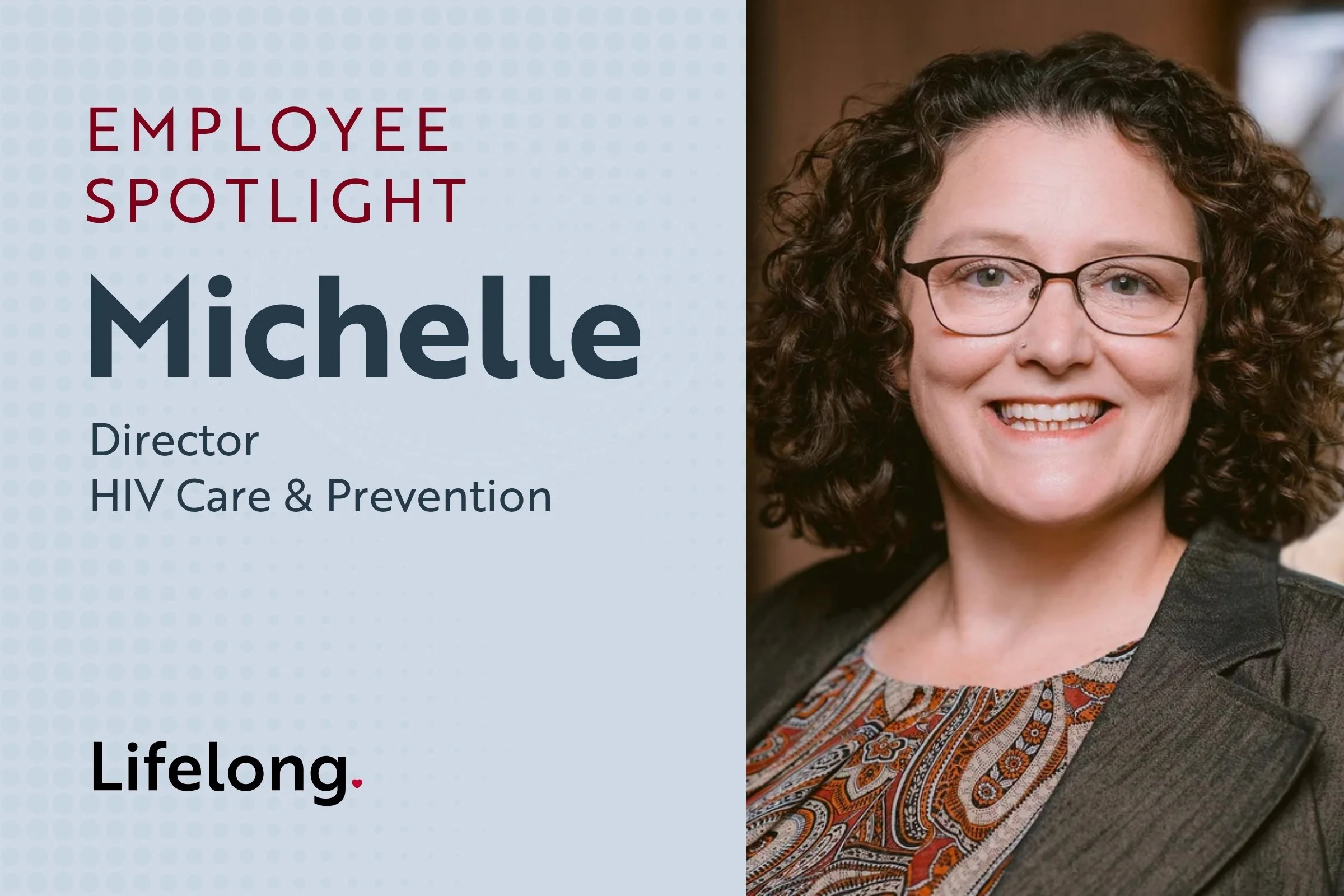
For the first in this series, we are shining a spotlight on Michelle, Director of HIV Care and Prevention. Michelle has supported case management at Lifelong and affiliated organizations for over twenty-five years.
How did you get involved in case management work?
When I was in high school, I started volunteering at a local Snohomish County organization as what they call a "buddy," helping with housework and whatever anyone needed to keep their lives moving forward. I began seeing a slew of HIV-positive patients coming in; this was pre-antivirals, in the early 90s. A very good friend I met through that volunteering experience died of an opportunistic infection. I decided then that I wanted to spend my senior year interning at the local HIV organization where I became their first intern case manager.
What did working as a case manager mean to you before antiretrovirals (ARVs) were available?
I worked in a nursing home for three years, so I was no stranger to death and dying. It was such an honor to help somebody through some of the scariest moments of their lives with compassion, dignity, and even some humor. The most vital work was getting people access to care while coordinating things like: where is their next meal coming from, are they entering hospice, are they linked with a provider who knows enough about HIV care to even prescribe the right medications?
It felt like desperately needed work. I felt like I was making a significant difference right away.
What drew you specifically to Lifelong, and what makes it unique?
People often come to us not sure where to go. They may be newly diagnosed, afraid to tell anyone, or carrying their own internal stigma from what society says about people living with HIV. They come through our doors and experience a welcoming, an acceptance, a lack of judgment that allows them to speak their truth. And we start working on a plan, focusing on whatever would have the most impact such as insurance, medical care, and then, depending on the person, substance use support, mental health, dental, legal help.
I've seen people go from a place of desperation to being fully supported with insurance, a housing subsidy, food and nutrition assistance, dental care, counseling. And not just surviving, but thriving. I've seen folks at the edge of their lives eventually come off disability programs, return to work full-time, and get to a place where either HIV is no longer at the forefront of their mind because it's handled — or where they want to give back, become a peer, and help others through the same process.
Who is Lifelong actually reaching?
Last year, Lifelong assisted nearly 2000 people with case management services– all of them HIV-positive individuals across six counties including: King, Snohomish, Skagit, Whatcom, Island, and San Juan counties. 41% of our clients are BIPOC, which reflects the disparities within our Black and Latino populations. About 48% of our clients are over 55. People living with HIV are living much longer now, but age-related health issues tend to onset 10 to 15 years earlier — as a result of both chronic inflammation from HIV and the long-term effects of medications.
The core of Lifelong’s clients are living in poverty, but that's not everyone. We continue to see stigma, both internal and external, affecting how people access care and take care of themselves. It is vital that we get to know the community, what is important to them, and remain flexible in our services.
Washington State has been quite innovative. When ADAP funds first came through, our state paid for comprehensive insurance premiums, including mental health, while other states didn't. Access to affordable healthcare is essential to viral suppression rates over 95%, which is what we have maintained in our case management services for quite some time. In addition, supporting and funding prevention services, needle exchange, and PrEP navigation is essential in preventing further transmission of HIV.
What does "expanding access" mean to you?
Our role is to make it so that when someone comes into our agency, everything is rolled out for them without a bunch of barriers. They're coached through the process so that things are smooth, easy to understand, and sustainable.
Access to medical care is the difference between survival and decline. HIV medications are still what saves lives. Access to insurance, to those medications, that is the difference between stumbling and having your health deteriorate versus surviving, thriving, and having wellness in your life.
As a case manager, we work across 15 different life domains: medical care, oral health, sexual health, mobility, basic necessities like food, clothing, and hygiene, housing stability, tenant rights and landlord communication, justice involvement and working with parole or community corrections officers, legal assistance, mental health, substance use, harm reduction, and isolation reduction. We work with everyone, from someone who is newly diagnosed to those who are long term survivors, and everyone in-between.
What do you do outside of work for fun or to destress?
To de-stress, you'll find me playing with my puppy, working in the garden, or riding my motorcycle.